


Overswinging is a vital component of modern golf performance, equipment optimization, and on-course scoring strategy. Understanding the underlying mechanics, ball flight laws, and physical feedback of overswinging allows players to reduce score variance and optimize swing repeatability.
Are you struggling with overswinging in your game? You’re not alone, and the key to unlocking consistent performance lies in finding the perfect length for your swing. Whether you’re a seasoned player or just starting out, understanding how to manage your swing length can transform your overall technique and elevate your success on the course. In this article, we’ll dive into the intricacies of overswinging and provide you with actionable insights to ensure you hit every shot with confidence and precision.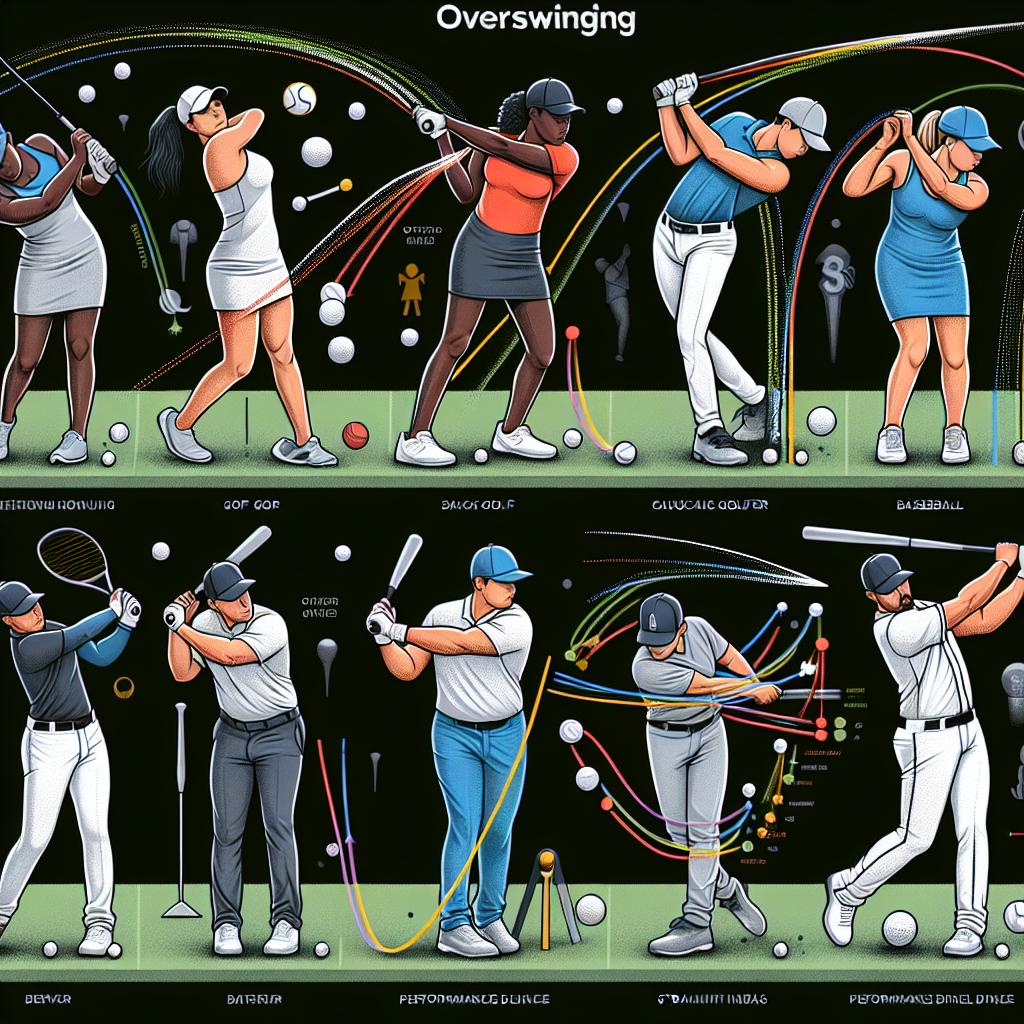
Understand the Impact of Overswinging
Understanding the nuances of overswinging can dramatically shape your performance. Imagine you’re trying to hit a tennis ball, but every time you swing your racket like you’re trying to swat a fly, you miss your target. Overswinging is similar; it often leads to inconsistency in your golf game, making it harder to achieve that coveted sweet spot on the ball. While it might feel stronger or more powerful in the moment, overswinging can be the party crasher of your swing thoughts, leaving you with more wild slices and hooks than you’d bargained for.
What Happens When You Overswing
When you let your momentum carry you away in your swing, a few things can happen. Here are some key consequences of overswinging to keep in mind:
- Loss of Control: Think of it like trying to drive a stick shift car while going 90 mph—it’s hard to maintain control and really just causes a lot of chaos.
- Inconsistent Ball Striking: Overswinging can lead you to mis-hit the ball. It’s like trying to hit a piñata that’s just a hair too high; you end up swinging wildly and missing altogether.
- Increased Tension: The tighter you grip that club in an overzealous swing, the greater tension you build. Ever tried to catch a butterfly while holding a fistful of grass? Same concept.
You may find that overswinging is tempting because it feels like you’re generating more power, yet paradoxically, it often leads to less distance because you’re not connecting with the ball correctly. Rather than “smacking it harder,” think “smacking it smarter.”
Finding the Sweet Spot
The crux of consistency lies in moderation. To hit that sweet spot every time, consider these practical tips:
- Focus on Rhythm Over Force: Try to maintain a steady rhythm—think of a metronome. Just because you can swing harder doesn’t mean you should.
- Shorten Your Backswing: A shorter backswing often leads to greater accuracy. It might feel counterintuitive, but you don’t need to take a full swing to make solid contact.
- Stay Relaxed: Engage those loose muscles. Feeling relaxed is just as crucial as a proper grip; you wouldn’t try to flex while catching popcorn, right?
- Practice with Purpose: When you hit the range, occasionally dial back on your full swings. Focus on dialing in your form instead of unleashing fury at the ball.
If you’re looking to quantify your improvements, consider tracking your swing speed versus accuracy. You might be surprised by the data! For instance, measuring your drives and comparing how often they land in ideal zones vs. when you overswing gives you insightful feedback on how viable new strategies are.
The Bigger Picture
Research continuously shows that in golf, often less really is more. Finding the balance between power and finesse could be the secret sauce to improving your game. Some pros even advocate taking a club less for distance off the tee just to maintain a more controlled swing. There’s also ongoing research into biomechanics that seeks to analyze the subtle movements in overswinging—turns out that even the slightest adjustments can lead to monumental differences.
The journey to consistency in your swing might resemble a rollercoaster—lots of ups and downs, and occasionally you might even want to throw your hands in the air in frustration. But by understanding the impact of overswinging and implementing targeted practices, you can reclaim control over your game and enjoy the ride a whole lot more!
Recognize the Signs of Overswinging
Identifying an overswing in your golf swing can often feel like trying to find a needle in a haystack. You might think you’re just adding a little extra oomph to your shot, but guess what? That little bit of extra can sometimes lead to tragic inconsistencies. If you’ve ever experienced that pesky slice or shanked a ball into the neighboring fairway, the culprit might just be lurking in the form of overswinging.
Common Indicators
Start paying attention to these telltale signs:
- Loss of Balance: Think of your swing like a tightrope walker—a shaky balance often leads to a tumble. If you consistently find yourself swaying or stumbling after your shot, you might be going too big.
- Head Movement: Your head should resemble a bobblehead on a smooth ride. If it’s bouncing up and down or swaying like a palm tree in a hurricane, chances are you’re overswinging.
- Inconsistent Contact: If your clubface is finding the ball more like a drunken sailor than a seasoned pro, you might be swinging too hard and losing that sweet spot.
And hey, if you’re hitting the ball obsessed with distance but not accuracy, your game’s probably looking more like a comedy show than a PGA tour event!
Physical Symptoms to Notice
Awareness of your body’s responses can also be illuminating. Here’s a checklist:
| Symptom | Description |
|---|---|
| Fatigue | A sudden need for a nap after the first few holes? That might be a sign you’re trying too hard. |
| Injury | Feeling twinges in your shoulders or back? That extra twist and torque might be getting the better of you. |
| Frustration | If you’re frequently yelling “fore” to dodge a flight of golf balls, the stress of overswinging is likely getting to you. |
Sometimes your body is just yelling at you to dial it back a notch. If those aches and pains start piling up like laundry on a Sunday afternoon, it may be time to reconsider your swing mechanics.
A Little Self-Reflection
Consider this: is your urge to overswing a reflection of your golfing ego? It’s all too easy to fall into the trap of thinking more swing equals more distance. But, as any good golfer will tell you, *control* is king. Next time you’re on the green, take a moment to evaluate your natural swing. It might just feel less heroic, but let me assure you, it could be your best friend for achieving consistency.
By keeping an eye out for these signs and symptoms, you’ll have a better chance at reigning in that overswing. Rather than swinging for the fences, focus on that sweet spot where power and accuracy meet—it’s bound to save not just your shots, but also your sanity!
Identify the Ideal Swing Length
Finding your groove during a swing can feel like searching for a needle in a haystack. Too long, and you’re losing control; too short, and you might miss the sweet spot entirely. Just like Goldilocks, you want your swing to be “just right.” So, how do you identify that magical length where you can consistently strike the ball with confidence and ease?
The Myth of the Perfect Swing Length
It’s important to recognize that the concept of a “perfect” swing length can be more elusive than your golf buddy’s missing sock. What works for one player might not work for another. Here’s a gist for you:
- Physical Dimensions: Your height, arm length, and even grip size play pivotal roles in defining your swing length. For example, if you’re built like a giraffe, you might need a bit more space in your swing than someone resembling a compact kangaroo.
- Stance Width: A wider stance often requires a slightly shorter swing arc to maintain balance. Conversely, a narrow stance can necessitate a longer swing to achieve the same power.
- Club Type: Different clubs require different swing lengths. Think of your driver as a decathlete—flexible and versatile—while your putter is more like a sprinter, needing precision over length.
Experimenting for Context
The next step is to experiment. Take some time on the driving range or practice green. Here’s how:
- Record Yourself: Use your phone to capture your swings from various angles. Look for clips that show your balance and control throughout the swing.
- Adjust Your Grip: Changing your grip pressure can impact swing length. Lighten up and see if you feel more fluid in your movements, or choke down to help control a longer swing.
- Mark Your Spot: If you feel adventurous, put down some markers where your swing seems most effective. You might find a sweet spot that leads to consistent contact and distance.
Data at Your Fingertips
Curious about how swing length affects performance? Here’s a quick rundown (and yes, your golf buddies will be super impressed with your newfound knowledge):
| Swing Length | Average Distance (yards) | Consistency Rating (1-10) |
|---|---|---|
| Short | 200 | 8 |
| Medium | 250 | 6 |
| Long | 275 | 5 |
As you can see, while longer swings can yield more distance, they may come at the cost of consistency. Think of it like trying to juggle flaming torches; it’s definitely eye-catching, but you might not make it to the next round of the talent show without spilling some kerosene on your shirt.
The Takeaway
Ultimately, identifying your ideal swing length is a personal journey. There’s no one-size-fits-all answer; instead, it’s more like a buffet where you pick and choose what works best for you. Stay patient, stay curious, and keep experimenting. You might just find that perfect length that makes your swing feel like a symphony rather than a cacophony of clashing notes. Remember that every golfer’s path is unique—yours is just waiting to be discovered!
Explore the Science of Consistency
When it comes to mastering any skill, consistency can often feel like a scientific formula—one part discipline, two parts determination, and perhaps a splash of serendipity. Whether you’re trying to ace your golf swing or perfecting your dive into the pool, finding that sweet spot in technique can be the difference between a smooth glide and a cannonball of chaos. Let’s dive into the nitty-gritty of maintaining that balance, because keeping everything steady isn’t just an art; it’s also a science.
Understanding the Variables
It might sound cliché, but in the realm of consistency, every little detail matters. Think about it this way: when you pull out your trusty oven to bake cookies, what happens if you tweak the recipe just a bit? You might end up with burnt edges or gooey middles instead of that perfect chewy center. The same goes for the mechanics of swinging—small adjustments in length can drastically alter the outcome.
- Balance: Staying centered is crucial. Leaning too far back can send your swing off course, just like trying to reach the last cookie in the jar might send you toppling over.
- Timing: Every swing has a rhythm. If you’re rushing, all that hard work can quickly crumble, much like your cookie dough if you don’t let it chill properly.
- Length: Finding the ideal length is like choosing the width of your spatula—too long and you’ll lose control, too short and you won’t get the leverage you need.
Data-Driven Decisions
Now, let’s talk numbers, because who doesn’t love some good data? Recent studies suggest that the optimal swing length often hovers around 75% of your full reach. But before you start measuring with a tape measure fit for a lumberjack, remember that individual variations can make a huge difference. Your height, arm length, and even those funky shoes you’re wearing on the day could affect this magic percentage.
| Height | Optimal Swing Length (% of Reach) |
|---|---|
| 5’5″ | 73% |
| 6’0″ | 76% |
| 6’5″ | 79% |
This table might just give you a clue about where you stand—literally! But still, it’s worth noting that research continues to evolve. In practice, the perfect swing length is often about trial and error. Want to keep it light? Think of it as a quest for that elusive ”cookie”. Keep experimenting until you’ve got it right, ideally without tasting too much failure along the way!
Unlock Strategies for Better Control
Achieving the ideal swing length might feel like finding a needle in a haystack, especially when you’re caught in the upswing of too many thoughts. Luckily, there are some straightforward strategies to help you regain control on the course, turning a tight swing into a sweet release. Picture your swing as a pendulum, needing just the right amount of tension and release; too much can send your golf ball careening off course like a wayward teenager after prom night!
Focus on Your Grip and Stance
Before we venture into the complexities of swing length, let’s talk about the basics: your grip and stance. Often overlooked, these are like the foundations of a house. If they’re shaky, the whole structure could crumble!
- Grip Pressure: Aim for a light grip, as though you’re holding a baby bird—firm enough to keep it secure, but gentle enough not to squash its fragile little body. If you’re squeezing the club like it just insulted your favorite sports team, you’re likely to overdo it and lose control.
- Stance Width: A comfortable, shoulder-width stance allows for stability and mobility, almost like you’re standing on a surfboard. Too wide, and you’ll find yourself stuck like a deer in headlights; too narrow, and you’ll topple over as soon as you swing. Balance is key here!
Visualize Your Target
Next up: visualization. This isn’t just for yoga classes! Before you swing, envision where you want that golf ball to go. This mental exercise can override errant thoughts about swing length, letting instinct take over. Think of it as putting a GPS in your golf game—without it, you’ll be wandering aimlessly through the fairways.
Additionally, you might want to employ alignment aids. Here are some tips:
- Align your body toward the target. Your feet, knees, hips, and shoulders should form a nice line, happy as a family heading for ice cream.
- Visual aids on the course—like aiming at a tree or a distant bunker—can help. Imagine each hole as a fun obstacle course. Find ’the flags’ and use them to guide your swing!
Practice with Purpose
It’s not just about swinging willy-nilly; we need structure here, buddy! Like training for a marathon, practicing with intention can aid immensely. Different drills can anchor your swing length, giving your brain something specific to focus on:
| Drill | Description |
|———————————-|————————————————–|
| Four-Club Challenge | Use only a driver, 5-iron, 9-iron, and putter. This forces you to focus on squash vs. stretch. |
| Swing Thought Journal | Keep track of swing thoughts and progress. Write down what works and what doesn’t—kind of like journaling about your first crush! |
| Mirror Drill | Stand in front of a mirror to visualize your swing path. Looks silly, but it’s a game changer! |
By focusing exclusively on your swing length during practice—like when you’re binging your favorite show and can’t help but tune into every character arc—you’ll condition your body to replicate that form under pressure. It’s like training a puppy; consistency and patience are paramount.
Keep these strategies in your back pocket, and don’t shy away from experimentation. Progress isn’t always linear, and sometimes you might feel lost in the weeds. But like they say, the road to golf mastery isn’t always straight—it’s full of doglegs and surprises. Bring your humor along for the ride, and remember, even the pros were once amateurs who didn’t know which end of the club to hold!
Learn from Professional Golf Techniques
When it comes to consistency in golf, mastering your swing technique is as crucial as remembering to bring an extra pair of socks for those unpredictable days on the course. Professional golfers often collaborate with coaches who dive deep into the nuances of their swings, ensuring every aspect is fine-tuned. Learning from these pros can help us amateurs avoid common pitfalls, like overswinging, which can turn a beautiful game into an unpredictable rollercoaster ride.
Observe and Adapt: The Power of the Short Game
Have you ever marveled at how a professional seems to generate incredible power without looking like they’re trying to lift a truck? That’s the magic of efficiency in the golf swing! Here are some lessons we can take from their approach:
- Short and Controlled Swings: Instead of flailing your arms like you’re swatting away a swarm of gnats, focus on making shorter, more controlled swings. This can lead to better accuracy and consistency in your shots.
- Finding Your Rhythm: Remember to develop a tempo that feels natural for you. Think of it like singing a favorite song—if you’re out of tune or tempo, the result won’t be pretty.
- Proper Grip and Stance: Take time to adjust your grip and stance as the pros do. A comfortable grip can be the difference between smooth sailing and a ball that goes nowhere near your target.
Drills from the Pros: Building Muscle Memory
Ever wonder why pros can hit the sweet spot nearly every time? It’s not just talent; it’s about repetition and muscle memory. You don’t have to become a tour player overnight, but you can incorporate some drills that they often use:
| Drill | Benefits |
|---|---|
| Slow Motion Swings | Focuses on form and mechanics without the pressure of hitting a ball hard. |
| One-Handed Swings | Helps build strength and control in each hand, enhancing overall swing balance. |
| Target Practice | Working on specific targets builds accuracy; it’s like playing darts, but way cooler! |
Becoming aware of your own tendencies, like overswinging—where your swing resembles a wild horse taking off—can help you rein it in. You might even want to film your practice sessions to catch what you’re doing wrong. It’s like a reality show episode, but instead of drama, you’re just trying to hit the green consistently. So grab that smartphone, set it up, and take a look; you might surprise yourself! Remember, each of these techniques brings you a step closer to a level of consistency that might have once seemed out of reach.
Experiment with Your Swing Dynamics
Finding the right dynamics in your swing can feel like chasing a mirage—just when you think you’ve nailed it, the target shifts again. That’s the beauty of golf, isn’t it? It’s both a science and an art form. When it comes to overswinging, understanding your swing dynamics is the key to lock in consistency. Let’s talk about how playing around with your swing can lead to those sweet, sweet moments of accuracy that make you look like a golf pro—maybe even in your neighborhood Saturday twosome.
Understanding Swing Mechanics
The intricacies of swing mechanics can often resemble rocket science. Swing dynamics encompass various factors such as body position, grip strength, and tempo. Think of it like a recipe: too much of one ingredient and it all goes south! Here are a few elements you might want to tinker with:
- Body Rotation: Pay attention to how your torso and hips rotate. A good swing starts from the ground up, so make sure your feet are planted solidly before you start twirling like a ballerina.
- Grip Pressure: Lighten your grip pressure! If you’re squeezing the club like it’s a stress ball, that tension can ripple through your entire swing. Imagine you’re holding a baby bird; you want to keep it secure without putting it into a panic.
- Backswing Length: A long backswing might feel powerful, but it can lead to a chaotic downswing. Limit your backswing to what feels comfortable, kind of like knowing your lane on a busy road.
Experimentation: The Path to Discovery
To really find your groove, you have to be willing to experiment—just like a mad scientist in a lab (minus the lab coat, of course!). Try altering different elements one at a time during practice sessions. For example, dedicate a session to focusing solely on your grip and then switch gears to work on rotation in another. Keep a swing journal to jot down your thoughts and observations! Charting progress is like creating a GPS for your golf journey.
Here’s a simple table of adjustments you can try, which can serve as a guide for your next practice round:
| Adjustment | Tip | Expected Change |
|---|---|---|
| Grip Pressure | Reduce tightness; hold it lightly. | Increased fluidity. |
| Backswing Length | Shorten if overswinging. | Better control. |
| Follow-Through | Focus on finishing high. | Smoother finish line. |
Mix it up every so often! Move the tee around or try hitting different clubs on shots you usually wouldn’t—it keeps things fresh and might lead to surprising results. This playful approach can help you discover the perfect length for your swing.
Ultimately, mastery comes through understanding your unique mechanics. Learning to embrace those quirks makes your game inherently you. Remember, each player’s dynamics are different, much like how each golfer’s swing has its own signature, just like a chef’s secret seasoning! So, don’t shy away from experimenting; after all, the fairways are your playground!
Achieve Ultimate Consistency in Golf
To achieve ultimate consistency in golf, every little detail matters—just like that stubborn speck of dirt on your favorite golf shoe. You’d think it’s insignificant, but when it compromises your grip, long story short, it can affect your swing. At its core, consistency in golf is all about finding that sweet spot between technique and natural flow. Picture yourself in your favorite little diner, where you know exactly what to order. That level of certainty in your choice translates beautifully to the golf course—but first, let’s explore how to streamline your swing and identify the perfect length.
The Grip and Stance: Laying the Groundwork
Here’s the deal: a solid grip and stance serve as the foundation of your consistency. Consider them the bread to your sandwich—if it crumbles, your whole meal is affected. When choosing your grip, think about the life of the party. Do you prefer a neutral grip, which provides versatility, or a strong grip that enhances your power? Each option has its merits, but the important thing is to stick with what feels natural for you.
When it comes to your stance, consider these factors:
- Feet shoulder-width apart: You want stability, not a tightrope act!
- Knees slightly flexed: Helps you move like a golf ninja!
- Flexibility is key: If you can barely bend over to tie your shoes, you might want to revisit your yoga class.
The Swing: Finding Your Rhythm
Once you’ve nailed your grip and stance, it’s time to talk about the swing. Imagine you’re at a concert: the drummer sets the rhythm, while the lead singer takes the stage. Your body is your band, and you need to find harmony! Keep your backswing smooth and controlled; don’t let excitement lead to overswinging.
Here are some practical tips to keep your swing consistent:
- Shorten your backswing: A shorter backswing doesn’t mean less power. Think of it as a compact car that can zip through traffic effortlessly.
- Maintain your tempo: Ever been on a road trip with friends? If one person is going the speed limit while the other is blasting their engine, the trip gets bumpy!
- Follow-through matters: It’s the grand finale of your swing. A proper follow-through not only improves distance but adds finesse to your shot.
Practice: Repetition Makes Perfect
If you think practice is tedious, try baking cookies without a recipe! You’ll either end up with lumps of dough or a burnt catastrophe. Dedicate time to practicing your swing with focus on consistency over power. Start by training your muscles to recognize the optimal length for your swing. Here’s a fun table to help you visualize how many reps to perform based on training frequency:
| Training Frequency | Repetitions on the Range | Time Devoted (Minutes) |
|---|---|---|
| Daily | 50-75 | 30 |
| Every Other Day | 30-50 | 20 |
| Weekly | 10-20 | 15 |
The magic of repetition is that it embeds your muscle memory so you can focus on other elements, like enjoying a cold drink afterward! Fine-tune your practice schedule, devote yourself to it, and soon, you’ll find that consistency becomes second nature—like an old friend that you can always count on.
Consistency in golf is about the perfect balance between a fluid, natural swing and precise technique. With the right grip, proper stance, and smart practice, you’re on your way to hitting your shots like a pro. And who knows, maybe you’ll be dropping birdies faster than you can say, “Do you have room for another round?”
Q&A
What is overswinging, and how does it affect performance?
Overswinging refers to a golfer’s tendency to take their swing too far back, leading to a variety of issues such as loss of control, inconsistent contact, and imprecise ball flight. Instead of a smooth and controlled swing, overswinging can result in a too aggressive downswing, often causing the clubface to be misaligned at impact. This is particularly common in amateur golfers, who may feel that swinging harder equates to hitting the ball further.
The impact of overswinging on performance is significant. According to a study from the American Journal of Sports Medicine, nearly 80% of amateur golfers displayed signs of overswinging, which correlated with a decrease in swing accuracy and an increase in slice shots. By focusing on a more controlled swing, golfers can improve their consistency and overall performance, making it easier to achieve desired results on the course.
How can I identify if I’m overswinging?
Identifying overswinging can be done through observation and analysis of a golfer’s swing mechanics. Signs include a dramatic increase in the length of the backswing, a noticeable imbalance during the swing, and difficulty in making solid contact with the ball. Additionally, golfers might find themselves hitting too many hooks or slices, which can be linked back to poor swing mechanics resulting from overswinging.
One effective way to assess your swing is to use video analysis tools or seek feedback from a golf instructor. By recording your swing from different angles, you can compare your backswing length to well-regarded golfers’ swings. Notably, elite players often maintain a compact and controlled backswing, allowing for better transition to the downswing. If your swing resembles a pendulum that swings too far back, it might be time to refine your technique.
What are the best techniques to shorten my backswing effectively?
Shortening your backswing can significantly improve your consistency on the course. One effective technique is to focus on the feeling of the proper turn rather than forcing the club to go further back. Engage your core and focus on rotating your shoulders while limiting arm movement. This approach will create a more compact backswing while maintaining adequate power.
Another avenue is incorporating training aids, such as alignment sticks or specialized swing trainers, that encourage you to develop muscle memory for a shorter, more controlled swing. Practicing with a mirror or video can also provide real-time feedback, making it easier to adjust your swing mechanics. Lastly, consider drills that promote rhythm and tempo over sheer distance—think more about your swing timing rather than the length of your backswing.
How can I improve my consistency after adjusting my swing length?
Improving your consistency after adjusting your swing length involves dedicating time to practice and build new muscle memory. Start by integrating drills that reinforce the shorter swing, focusing on maintaining balance and control throughout your swing. The use of a metronome or tempo training can enhance timing, ensuring that each swing feels fluid and repeatable.
Additionally, work on your follow-through to enhance your overall swing mechanics. A balanced follow-through indicates a well-executed swing, further promoting confidence. Consistency is improved through repetition, so maintaining a structured practice routine while gradually increasing your swing speed will help solidify these new techniques. Regularly assessing your progress through video analysis can also provide insights into your development journey, allowing for fine-tuning as needed.
What role does grip play in overswinging?
Grip plays a pivotal role in overswinging, as it directly influences how a golfer controls the club. A too-tight grip can lead to excessive tension throughout your arms and shoulders, which often results in pulling the club back further than needed. Conversely, a loose grip may not provide adequate control, making it tempting to overswing to compensate for the lack of stability during your swing.
Experimenting with grip pressure can help identify what feels most natural and effective for your swing. Aim for a pressure level between a tight handshake and a firm grip; this balance will help you execute a more controlled swing. Moreover, focusing on a proper grip placement—where the club rests more in the fingers than the palm—can promote better wrist hinge, facilitating a shorter and more effective backswing.
Are there any mental strategies to help with overswinging?
Mental strategies can be just as essential as physical adjustments for combating overswinging. One effective approach is visualization—imagine yourself executing a successful shot with a controlled backswing. This technique can help you internalize the feeling of a shorter swing and boost your confidence, ultimately leading to improved performance.
Additionally, mindfulness practices like deep breathing or pre-shot routines can help center your focus and reduce anxiety that might lead to overswinging. This includes developing a consistent pre-shot routine that features a mental check-in—reminding yourself to maintain a compact swing, giving you a moment to refocus before executing the shot. Pairing these mental tools with physical practice can create a holistic improvement in golfing consistency.
Biomechanical and Tactical Analysis: Overswinging
When analyzing the technical fundamentals and kinematic efficiency associated with overswinging, golfers must account for three critical performance factors:
- Kinematic Sequencing: Proper energy transfer from the ground up through the pelvis, torso, lead arm, and club shaft ensures maximum clubhead speed at impact.
- Face-to-Path Dynamics: Controlling clubface orientation relative to the horizontal swing plane dictates initial ball start line and horizontal curvature dispersion.
- Dynamic Angle of Attack: Striking the ball at the optimal vertical descent or ascent angle maximizes Smash Factor and controls spin rates for predictable distance control.
Performance Diagnostic & Comparative Matrix: Overswinging
| Evaluation Parameter | Standard Tour Benchmark | Biomechanical / Ball Flight Factor | Pro Recommendation & Practical Correction |
|---|---|---|---|
| Dynamic Loft & Spin | Optimized launch window (10°–14° Driver / 18°–22° 7-Iron) | Governs aerodynamic lift and ground rollout behavior | Adjust ball position and forward shaft lean to stabilize dynamic loft |
| Club Path Angle | Neutral to slightly in-to-out (-1.0° to +2.0°) | Directs launch direction and side spin curvature | Maintain pelvic rotation through impact without sliding off balance |
| Center Contact Efficiency | Smash Factor > 1.48 (Driver) / > 1.38 (Mid-Irons) | Eliminates energy loss from gear-effect twisting | Utilize impact spray on the clubface to verify centered sweet-spot strikes |
Tour-Tested Drills and Strategic Guidance (Overswinging)
To integrate consistent execution of overswinging into your game, practice this structured three-step protocol during your practice sessions:
- Slow-Motion Rehearsal: Execute 5 deliberate practice swings at 50% speed, pausing at address, the top of the swing, and the delivery slot to confirm proper body alignment.
- Alignment Stick Feedback: Place an alignment stick along your target line to ensure your stance, hips, and shoulders remain parallel to the intended start line.
- Targeted Execution: Hit 10 consecutive golf balls focusing strictly on balance and smooth rhythm rather than maximum distance.
How does overswinging directly impact golf scoring?
Improving consistency in this area tightens shot dispersion, reduces penalty hazards off the tee, and leads to closer proximity to the hole on approach shots.
Can golfers of all handicap levels benefit from these principles?
Yes. Regardless of swing speed or experience level, adhering to fundamental ball flight laws and balanced body mechanics yields immediate improvements in ball striking.
Future Outlook
Overswinging? Find the Perfect Length for Consistency has unpacked the nuances of your swing and how to fine-tune it for optimal performance. By understanding the delicate balance between power and control, you can transform your game from erratic to exceptional. Remember, it’s not just about swinging harder; it’s about swinging smarter and maintaining that sweet spot of consistency with each stroke.
As we’ve explored, finding the perfect length isn’t a one-size-fits-all endeavor—it requires introspection, practice, and oftentimes a little humor as you navigate through the ups and downs of golf. Just like a good joke, precision in your swing involves timing, delivery, and knowing your audience—be it the fairway or your own expectations.
So, the next time you find yourself on the course dangerously overswinging, take a moment to pause. Reflect on the insights shared here, adjust your approach, and you may just find that the key to a more consistent game lies in those subtle modifications. Swing with confidence, and remember that the perfect length is not just your physical measurement but also your mental state. Now, go out there and swing away—just maybe leave the overswinging for your “behind the scenes” blooper reel!
Get our latest guides, news, and insights highlighted in your Google Search & AI Overviews.


 DON’T MISS OUT